Hooks
How to Choose Baitholder Hooks for Worms and Live Bait
What baitholder hooks do, why shank barbs matter, and how to think about hook size for worms and soft bait.
Quick answer
Choose baitholder hooks when soft bait needs help staying on the hook. The small barbs on the shank grip worms, minnows, shrimp, or cut bait so the bait is less likely to slide down during casting or light bites.
Setup fit
Best uses for baitholder hooks
Baitholder hooks are useful whenever soft or natural bait is part of the setup.
Smaller sizes fit panfish and trout presentations, while larger sizes are more useful for bass, catfish, or bigger bait pieces.
What makes a baitholder hook different
A baitholder hook usually has small barbs on the shank. These barbs are not for hooking the fish; they help keep bait from sliding down the hook.
That makes them helpful for worms, shrimp, minnows, and soft bait that can tear or slip during casting.
How to think about hook size
Start by matching the hook to the bait. If the hook is so large that the bait looks stiff, go smaller. If the bait hides the hook point completely, adjust the bait or hook size.
A small assortment lets casual anglers adapt without buying a separate pack for every fishing spot.
When a long shank helps
Long shank hooks are easier to handle and can make bait placement simpler, especially for worms or longer bait pieces.
They can also be easier to remove from smaller fish, which is useful for supervised family fishing.
Freshwater and saltwater care
Corrosion-resistant hooks can be used in different water conditions, but saltwater tackle should still be rinsed and dried after use.
Dry storage matters because hooks stored wet can rust even when the finish is designed for regular fishing use.
Quick takeaway
Use baitholder hooks when bait retention matters, and choose a size that fits the bait before thinking about the fish.
Related ELLYCIO Product
Useful tackle for this guide
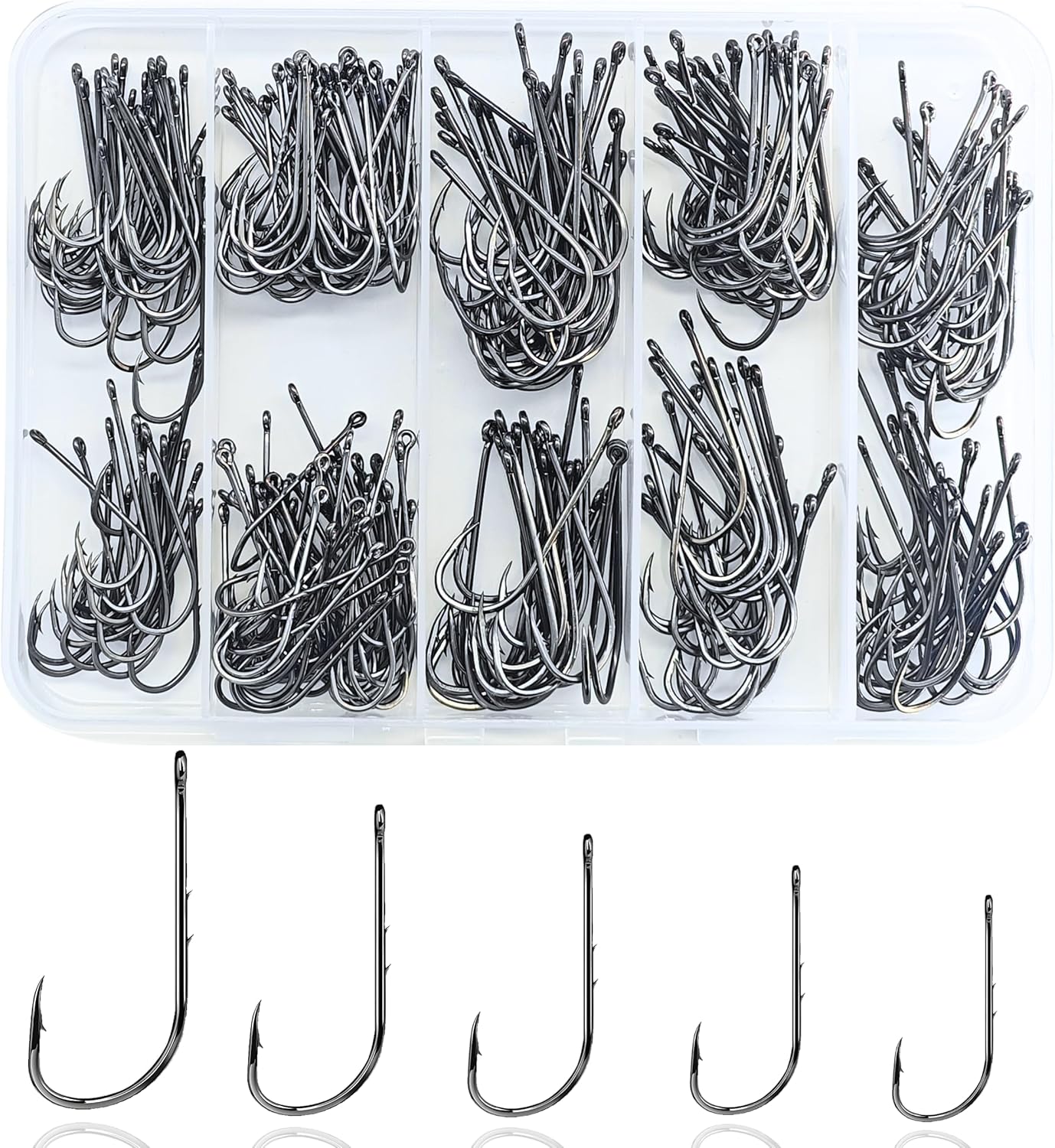
300pcs Baitholder Hooks
Double barb design that holds live bait securely
Keep reading