Tackle Connectors
Duo Lock Snaps vs Speed Clips: What's the Difference?
Two common quick-change connectors, where they overlap, and how casual anglers can choose the simpler option.
Quick answer
Both duo lock snaps and speed clips help anglers change lures without tying a new knot each time. Duo lock snaps are a secure general connector, while speed clips are usually chosen for fast lure changes with a compact, simple shape.
Setup fit
Where quick-change clips help
Quick-change connectors are useful when fish are responding to lure changes, color changes, or depth changes.
They are less about one species and more about efficiency when testing crankbaits, spoons, jigs, spinners, or soft lures.
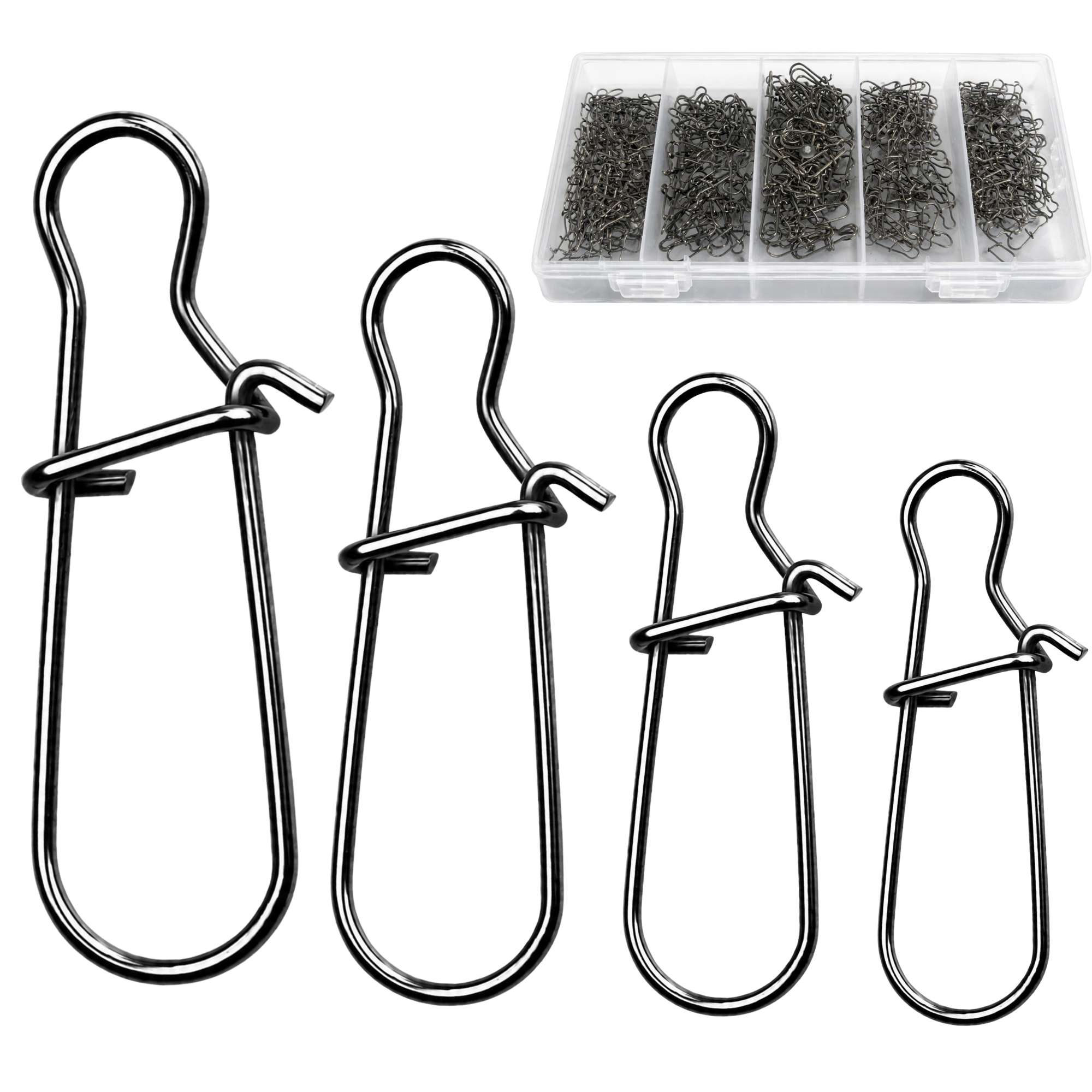
How duo lock snaps work
A duo lock snap uses a small dual-closure shape to connect line, leaders, swivels, or lures.
It is a useful all-around connector when you want a secure connection that is still easy to open and close.
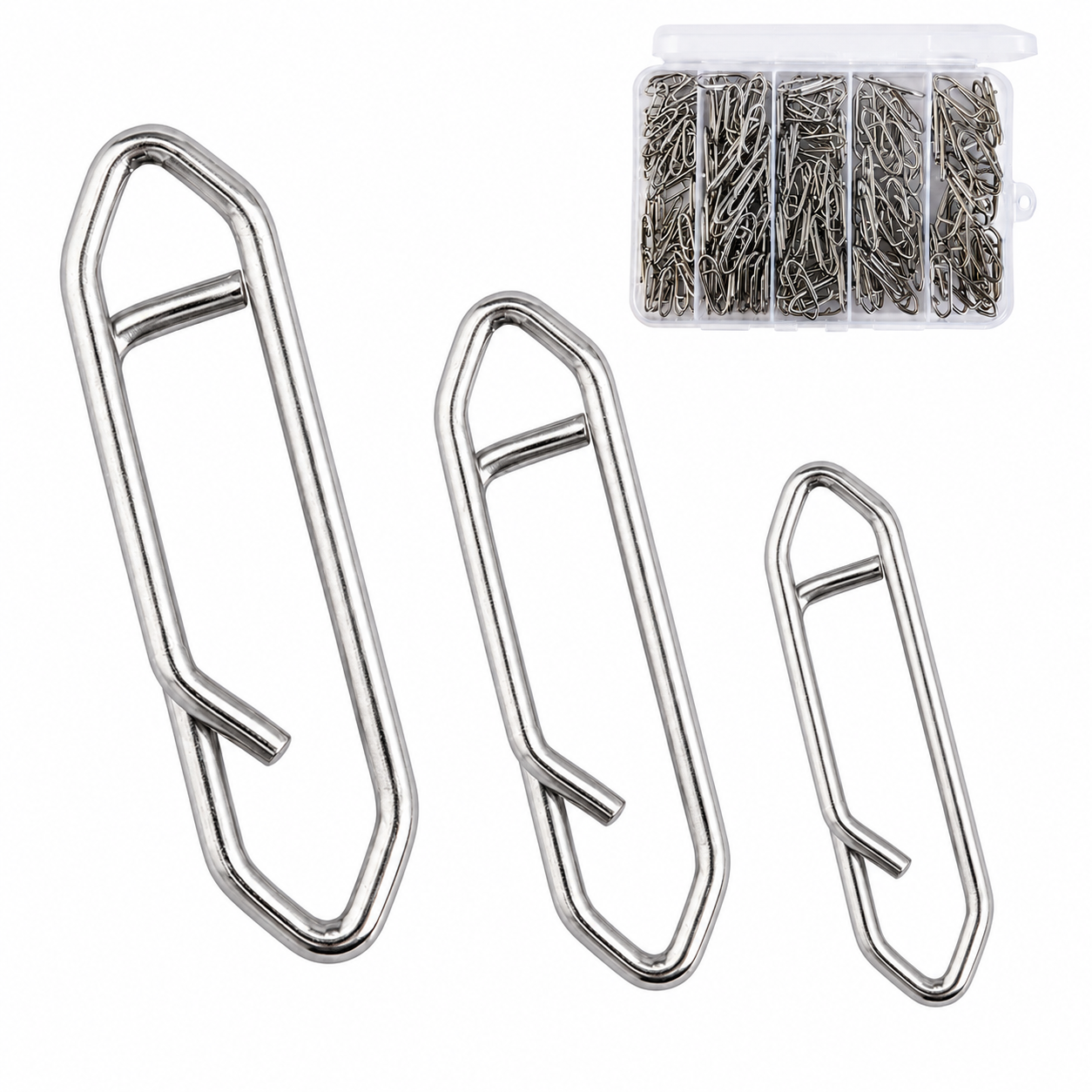
How speed clips work
A speed clip is designed around fast lure changes. The shape is simple, compact, and often used by anglers who switch hard baits or jigs frequently.
The main goal is to reduce retying while keeping the connector small enough for the lure to move naturally.
How to choose between them
Choose the smallest connector that fits the lure, leader, and target fish. Oversized hardware can affect lure action.
If you need a general snap for different terminal tackle, duo lock snaps are easy to understand. If you mostly change lures quickly, speed clips may feel simpler.
Common beginner mistake
Do not use one connector size for every lure. A clip that is too large can make a small lure look unnatural in the water.
Keep a few sizes organized and check that the connector closes cleanly before casting.
Quick takeaway
Duo lock snaps and speed clips both save time; choose by lure size, connection security, and how often you change presentations.
Related ELLYCIO Product
Useful tackle for this guide
Keep reading